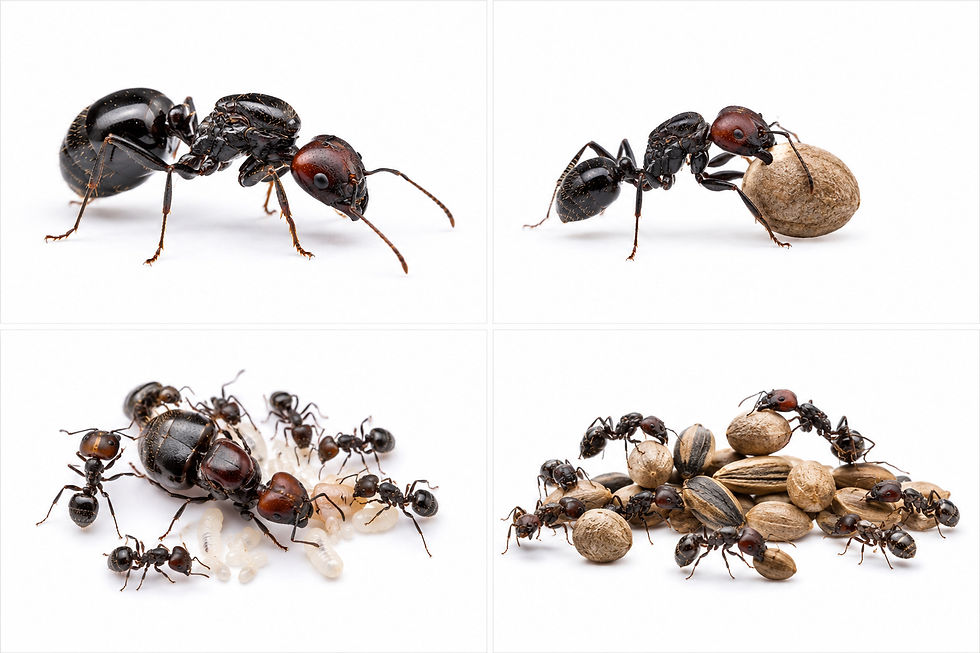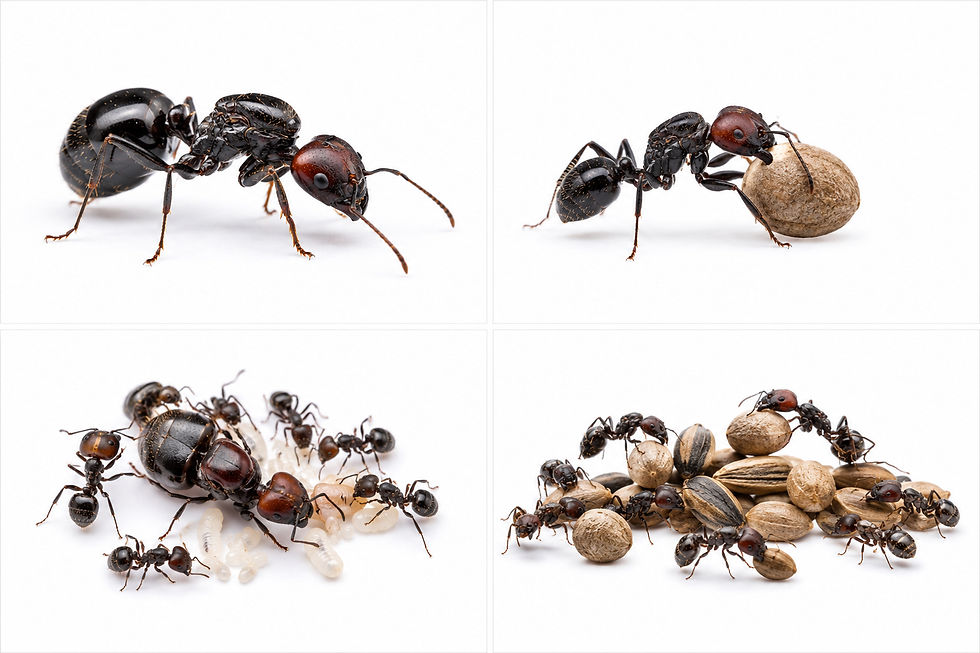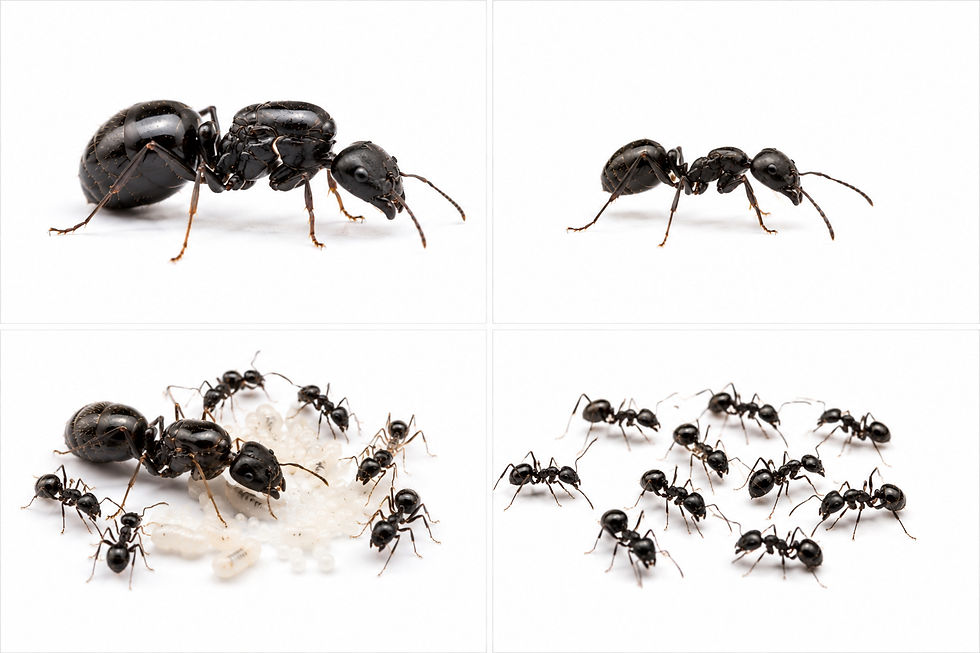

Welcome to House of the Ants
One of the best ant webshops in the Netherlands. Ants as your own pets.
View our nests and ant colonies.
Welcome to House of the Ants!
Start your ant farm adventure here!
This is where your ant farm adventure begins. With our modular nests and outdoor worlds, you can see how ants live and grow. What normally happens underground can now be seen in one of our ant farms.
The fascinating life of ants, in your own room. Start with just a queen or a small colony and watch it grow into a large colony.
Safety is our top priority. That's why all our modular nests have been thoroughly tested by experienced ant keepers . The interior has a natural beige hue , which helps ants feel at home more quickly, develop better, and gives the whole nest a realistic appearance.
Need help or have questions? Feel free to send us a message via the contact form or WhatsApp.
Become your own ant farmer for your own ant colony!
SERVICES AND METHOD
CATEGORIES
Check out our shop categories below. Did you know we also offer custom-made models and that all our products are tested for weeks by experienced ant farmers?
Our shop categories

DISCOVER OUR BESTSELLERS
FAVORITE PRODUCTS
Modulaire Nesten
THE STORY BEHIND HOUSE OF THE ANTS
Read more about House of the Ants, Collaborations and Quality & Safety

House of the Ants
Hi! I'm Rick, and I design and build my own ant nests. In 2020, I fell in love with the ant hobby;
It all started when a colleague of mine told me a story about his daughter who kept ants as pets. I was amazed, and to me, it sounded almost impossible!
After I finished work, I drove home with antkeeping on my mind, and when I got home, I started searching online for antkeeping. I quickly discovered that antkeeping is a serious hobby!
I quickly ordered my first two colonies that same day, Messor barbarus and Messor structor. I truly fell in love with this hobby and have enjoyed it every day since. After a few months, I ordered my first Camponotus species, and many more colonies would follow.
Collaborations
House of the Ants supports schools and organizations with educational ant colonies.
We recently assisted Teylingen College KTS in Voorhout, where a fully equipped animal corner was all that was missing was an ant colony. We provided the school with a complete Camponotus nicobarensis colony, including its nest and outdoor environment, so students can observe the behavior and development of a real colony up close.
Would you also like to let students, visitors or members discover how an ant colony functions and learns?
Please feel free to contact us for advice or a suitable educational set.


Quality & Safety
Safety is our top priority!
All our products are meticulously tested by experienced ant farm owners. These ant farmers spend weeks testing everything to ensure that our modular nests, ant drinking fountains, and outdoor worlds are safe and escape-proof. We continuously develop and improve our products because this is of paramount importance to us!
Humidity
All our nests, including our leaf cutter cylinders, have a self-sufficient humidity system. Fill the ant nest's test tube with the blue sponge, and the nests will maintain the right humidity for your ants for over six weeks . Our cylinders contain two substrates that provide a whopping 99% humidity for three months .
REVIEWS
Satisfied Customers
Check out our Trustpilot , Google , and Webwinkelkeur reviews and read what our customers think of their ant colonies and accessories.
Michael van der Wal
Super good service! Very friendly, even after I ordered, they were able to make some adjustments to their product. I'm very satisfied!
Alex Dekker
Great experience. I've now purchased various products, from liquid feeders to a complete cylinder. Everything is beautifully finished and made with care. The owner appreciates feedback and is happy to help. The customer is king is paramount here.
Jill
Great service, fast delivery and top products
I asked for and received advice beforehand. Then I placed an order, and it arrived very quickly. The products are of good quality, and my ants are always very happy with them. I won't use any other company for my ants. Top-notch service!
Jordy
Great webshop! I get all my ant products from here. 100% quality! Very customer-friendly. Have any questions about ants? They always have the answers and are happy to help.
Tania Visser
Great products and lots of selection! And very friendly service! I don't need anything for the ants right away, but if I do, I'll order it here :D
Coen van de Plas
I highly recommend ordering from here; Rick is very helpful. Everything was well-packaged, and because I was on vacation, it wasn't a problem at all that it was shipped later. Now that's what I call service! I also placed another order later; the printed steps are very handy for ants.
Frequently Asked Questions

What is a monogyne ant queen?
A monogynous ant queen is an ant queen that mates and reproduces with only one male (called a drone). This is in contrast to a polygynous ant queen, which mates with multiple males. In monogynous ant species, there is usually only one fertile queen per colony, while in polygynous ant species, multiple fertile queens can live in the same colony. Having only one queen per colony contributes to colony stability and cohesion, as there is less rivalry between queens and less aggression between workers.
What happens if you merge several monogyne ant queens together?
If you put several monogynous ant queens together, they will likely fight each other to determine dominance. This is because each queen wants to be in charge of the colony and produce her own offspring. This competition can lead to a weakened colony and sometimes to the death of one or more queens.
In some ant species, however, it is possible for multiple monogynous queens to merge, provided this happens at the right time and under the right conditions. This is called "founding queen association" and occurs, for example, in some ants from the genus Lasius. The queens then work together to establish the colony and produce offspring together. Over time, one queen can become dominant and kill or chase away the others, after which she takes over leadership of the colony.
Which popular ant species are monogyne?
There are several popular ant species that form monogynous colonies. Below are a few:
1. Lasius niger: This is a common ant species in Europe and North America. Colonies are monogynous and usually consist of one queen and several thousand workers.
2. Camponotus pennsylvanicus: This is a large ant species found in North America. Colonies are monogynous and consist of one queen and several hundred to thousands of workers.
3. Pheidole megacephala: This is a tropical ant species found in Southeast Asia and Oceania. Colonies are monogynous and consist of a single queen and several hundred to thousands of workers.
4. Solenopsis invicta: This is an aggressive ant species found in South America and now also in parts of North America and Asia. The colonies are monogynous and consist of one queen and several thousand workers.
It's important to note that not all individuals of an ant species in every colony exhibit the same behavior. There can be variations in behavior and traits between colonies of the same species, depending on various factors such as the environment and food sources.
Which ant species have more than 1 queen?
There are several ant species that have multiple queens in a colony. This is called polygyny. Below are some examples of polygynous ant species:
1. Argentine ants (Linepithema humile): This species has colonies with hundreds or even thousands of queens.
2. Meadow ants (Lasius spp.): These ants often have multiple queens in a colony, although the number can vary depending on the species and the size of the colony.
3. Carpenter ants (Formica spp.): Some species of carpenter ants also have multiple queens in a colony.
4. Black garden ant (Lasius niger): This species often has multiple queens in one colony.
5. Red Wood Ant (Formica rufa): This is another species of carpenter ant that is known for having multiple queens in a colony.
In general, polygyny is quite rare among ants, as most species have a single queen.
How does a polygyny colony work?
A polygyny colony is an ant colony with multiple queens. In these colonies, the queens work together to lay eggs and manage the colony.
One of the advantages of polygyny is that it increases the colony's chances of survival. If one queen dies, the colony can continue to exist because there are still other queens available to lay eggs. It can also help reduce the risk of inbreeding, as the genetic diversity of the colony increases with the presence of multiple queens.
In polygynous colonies, the worker ants have no preference for a specific queen and work together to maintain the colony. The queens cooperate to allocate the colony's tasks and guide the workers. One of the queens' most important functions is producing pheromones that help the workers communicate and perform their tasks.
While polygynous colonies have several advantages, there are also disadvantages. For example, if the colony grows too large, it can experience a shortage of food and space, eventually leading to its collapse. Queens can also sometimes compete with each other, with one queen trying to outcompete the other and lay more eggs, potentially leading to conflict within the colony. Nevertheless, polygynous colonies generally function well and are an interesting subject for research into the social organization of ants.
Do polygyny colonies engage in inbreeding?
In polygynous colonies, there is a reduced risk of inbreeding because multiple queens reproduce. This helps increase the colony's genetic diversity and reduces the risk of genetic defects resulting from inbreeding.
However, it's not entirely impossible that inbreeding does occur in polygynous colonies. For example, if the colony grows too large and the worker ants primarily mate with male ants from their own colony, this can eventually lead to inbreeding. This can result in reduced genetic diversity and an increased risk of hereditary diseases and abnormalities.
In general, however, inbreeding is less likely to occur in polygynous colonies than in single-queen colonies, because the presence of multiple queens increases the genetic diversity of the colony.
Do polygamous queens need more space?
Polygyny colonies generally require more space than single-queen colonies because there are more individuals sharing the space. Furthermore, polygyny colonies often have more brood and worker ants than single-queen colonies, requiring more space for food storage and brood care.
The exact amount of space a polygynous colony needs depends on several factors, such as the size of the colony, the ant species, and the environment in which they live. In general, polygynous colonies require a more diverse environment with sufficient food sources and nesting sites. This may mean, for example, that the colony spreads out over multiple nests or that more nesting material is available to the colony.
Limited space can lead to stress for the ants and conflict between individuals in the colony. This can ultimately lead to a decline in the colony's health and productivity. Therefore, it's important to provide sufficient space and resources for a polygynous colony to ensure its health and optimal functioning. Here are the FAQs. Description
Wat zijn mijten en hoe schadelijk zijn ze voor de mieren?
Mijten zijn kleine, spinachtige wezens die behoren tot de groep van geleedpotigen. Ze komen veel voor in de natuurlijke omgeving en worden vaak aangetroffen als parasieten op verschillende soorten dieren, waaronder mieren.
Mijten kunnen schadelijk zijn voor mieren, afhankelijk van de soort mijt en de mate van besmetting. Sommige mijten leven als ectoparasieten op de buitenkant van de mieren en voeden zich met hun lichaamsvloeistoffen, terwijl andere mijten zich in de mieren nestelen en zich voeden met hun larven of eieren.
Door hun voeding kunnen mijten de gezondheid van mieren aantasten, wat kan leiden tot verminderde groei en ontwikkeling, verminderde weerstand tegen ziekten en zelfs de dood. Bovendien kunnen mijten ziekten en infecties overdragen op mieren, wat hun gezondheid verder kan ondermijnen.
Het is dus belangrijk voor mierenkolonies om zich te beschermen tegen mijten en andere parasieten, bijvoorbeeld door het regelmatig schoonmaken van het nest en het vermijden van contact met besmette mierenkolonies.
Hoe weet je dat het schadelijke mijten zijn?
Het bepalen of mijten schadelijk zijn voor mieren vereist meestal een gedetailleerde analyse van de interactie tussen de mijten en de mieren. Hier zijn enkele tekenen dat mijten schadelijk kunnen zijn voor mieren:
1. Verhoogde sterfte: Als er een toename is van het aantal dode mieren in een kolonie, kan dit een aanwijzing zijn dat mijten de kolonie hebben besmet.
2. Verstoorde groei en ontwikkeling: Als de mieren in een kolonie kleiner zijn dan normaal of als de ontwikkeling van de larven wordt vertraagd, kan dit een teken zijn dat de mijten de gezondheid van de kolonie aantasten.
3. Verminderde activiteit of gedragsveranderingen: Als de mieren minder actief zijn dan normaal of als ze ongewoon gedrag vertonen, zoals bijvoorbeeld het vermijden van bepaalde gebieden van het nest, kan dit een teken zijn dat er mijten aanwezig zijn.4. Zichtbare mijten op de mieren: Als er mijten aanwezig zijn op de buitenkant van de mieren, kan dit een teken zijn dat de mijten zich voeden met de lichaamsvloeistoffen van de mieren en mogelijk schadelijk zijn.Het is echter belangrijk om op te merken dat niet alle mijten schadelijk zijn voor mieren. Sommige soorten mijten leven in symbiose met mieren en bieden voordelen zoals voedsel of bescherming tegen andere parasieten. Het is dus belangrijk om de specifieke soort mijten en hun interactie met de mieren te onderzoeken voordat je conclusies trekt over hun effect op de mierenkolonie.Wat kan je doen tegen mijt bij je mieren?Als je vermoedt dat jouw mieren besmet zijn met mijten, zijn er verschillende stappen die je kunt nemen om de mijten te bestrijden en de gezondheid van de mierenkolonie te verbeteren:1. Reinig het nest: Mijten gedijen in vuile en vochtige omgevingen, dus het regelmatig schoonmaken en drogen van het nest kan helpen om de mijtenpopulatie te verminderen. Verwijder ook dode mieren en afval uit het nest.2. Gebruik mierenveilige mijtbestrijdingsmiddelen: Er zijn verschillende mijtbestrijdingsmiddelen op de markt die veilig zijn voor mieren, zoals diatomeeënaarde of essentiële oliën. Zorg ervoor dat je het juiste middel gebruikt voor jouw mierensoort en volg de instructies op het etiket.3. Verplaats de mierenkolonie: Als de mijtenbesmetting ernstig is, kan het verplaatsen van de mierenkolonie naar een nieuwe en schonere omgeving helpen om de mijtenpopulatie te verminderen.4. Verhoog de hygiëne: Zorg ervoor dat je de hygiëne van de mierenkolonie op peil houdt, bijvoorbeeld door regelmatig voedselresten te verwijderen en het nest droog te houden. Geef de mieren ook een gevarieerd dieet om hun weerstand tegen mijten en andere ziekteverwekkers te verhogen.Het is belangrijk om op te merken dat het voorkomen van mijtenbesmettingen beter is dan het behandelen ervan. Zorg er dus voor dat je regelmatig het nest en de omgeving van de mierenkolonie schoonmaakt en dat je de gezondheid van de mieren goed in de gaten houdt om eventuele problemen vroegtijdig te signaleren.Wat is roofmijt?Roofmijten zijn een soort mijten die zich voeden met andere mijten, insecten en hun eieren of larven. Het zijn dus eigenlijk predatoren binnen de mijtenfamilie. Roofmijten zijn daarom ook bekend als "biologische bestrijders" in de landbouw en tuinbouw, omdat ze kunnen worden gebruikt als natuurlijke manier om plagen te bestrijden.Roofmijten zijn erg nuttig omdat ze kunnen helpen bij het bestrijden van plagen zoals spintmijten en andere mijten, die schadelijk kunnen zijn voor planten en gewassen. Roofmijten worden vaak commercieel gekweekt en verkocht in kleine zakjes of flesjes, die dan worden verspreid over de planten die behandeling nodig hebben.Wanneer de roofmijten worden geïntroduceerd in een omgeving met een plaag, zullen ze zich snel voortplanten en beginnen met het eten van de schadelijke mijten. Roofmijten zijn doorgaans niet schadelijk voor de planten zelf, omdat ze zich alleen voeden met andere mijten en insecten.Er zijn verschillende soorten roofmijten en elke soort heeft zijn eigen voorkeur voor prooien en leefomgeving. Daarom is het belangrijk om de juiste soort roofmijt te kiezen voor de specifieke plaag die je wilt bestrijden.
Waarom doen mieren aan een winterrust? Mieren doen aan een winterrust, ook wel diapauze genoemd, om te overleven tijdens de koude en droge wintermaanden wanneer de omstandigheden uitdagender zijn. Tijdens de winter is er minder voedsel beschikbaar en de temperatuur daalt, waardoor de mieren hun stofwisseling verlagen en hun activiteit verminderen om energie te besparen. Dit stelt hen in staat om hun energiereserves te behouden en te overleven totdat de omstandigheden gunstiger worden in de lente. Bovendien helpt de winterrust de mieren zich te beschermen tegen de negatieve effecten van de koude temperaturen. Door in hun nesten te blijven of naar diepere grondlagen te migreren, kunnen ze zich beschermen tegen bevriezing en uitdroging. Hierdoor kunnen ze de winter overleven en zich voorbereiden op het broedseizoen in de lente. Wat zijn de voordelen van een winterrust? Er zijn verschillende voordelen van een winterrust voor mieren: 1. Overleving: De belangrijkste reden voor de winterrust is om de mieren te helpen overleven tijdens de koude en droge wintermaanden. Door hun stofwisseling te verlagen en hun activiteit te verminderen, kunnen mieren hun energiereserves behouden en overleven totdat de omstandigheden gunstiger worden in de lente. 2. Energiebesparing: Tijdens de winterrust verlagen mieren hun stofwisseling en verminderen ze hun activiteit om energie te besparen. Dit stelt hen in staat om hun energiereserves te behouden en te overleven totdat de omstandigheden gunstiger worden in de lente. 3. Bescherming tegen koude temperaturen: Door in hun nesten te blijven of naar diepere grondlagen te migreren, kunnen mieren zich beschermen tegen bevriezing en uitdroging. Dit helpt hen te overleven tijdens de wintermaanden. 4. Voorbereiding op het broedseizoen: Door de winterrust kunnen mieren zich voorbereiden op het broedseizoen in de lente. Ze kunnen hun energiereserves opbouwen en zich voorbereiden om te broeden en hun kolonie uit te breiden wanneer de omstandigheden gunstiger worden. Kortom, de winterrust is een belangrijk overlevingsmechanisme voor mieren en stelt hen in staat om te overleven tijdens de uitdagende wintermaanden. Vaak zegt men, als je de mieren in winterrust doet, groeien ze daarna sneller. Klopt dit? Er is geen wetenschappelijk bewijs dat het in winterslaap brengen van mieren leidt tot een snellere groei na de winter. Het is echter wel bekend dat de winterrust een belangrijke rol speelt in de overleving van mieren tijdens de wintermaanden, en dat mieren zich tijdens deze periode voorbereiden op het broedseizoen in de lente. Tijdens de winterrust verlagen mieren hun stofwisseling en verminderen ze hun activiteit om energie te besparen. Dit bespaart hun energiereserves en stelt hen in staat om te overleven totdat de omstandigheden gunstiger worden in de lente. Naarmate de temperaturen stijgen en de omstandigheden gunstiger worden, zullen de mieren actiever worden en zich voorbereiden op het broedseizoen. Hoewel er geen wetenschappelijk bewijs is dat het in winterslaap brengen van mieren leidt tot een snellere groei na de winter, kan het wel zo zijn dat mieren die goed hebben overleefd tijdens de wintermaanden, sterker en gezonder zijn en daardoor beter in staat zijn om te groeien en zich voort te planten in de lente. Op welke temperaturen moet ik mijn mieren zetten voor de winterrust? De ideale temperatuur voor de winterrust van mieren varieert afhankelijk van de soort mieren die je hebt. Sommige mierensoorten hebben een winterrust nodig bij temperaturen rond het vriespunt, terwijl andere soorten een hogere temperatuur vereisen. Over het algemeen hebben de meeste mierensoorten een winterrust nodig bij temperaturen tussen de 5 en 15 graden Celsius. Als je mieren houdt als huisdieren, is het belangrijk om te weten welke temperatuur geschikt is voor de winterrust van jouw specifieke mierensoort. Dit kun je het beste opzoeken in gespecialiseerde literatuur of raadpleeg een expert op het gebied van mieren. Als je mieren in de natuur wilt observeren, is het belangrijk om hun natuurlijke omgeving te begrijpen en te weten welke temperatuur geschikt is voor hun winterrust. In het algemeen geldt dat mieren in de wintermaanden in hun nesten blijven en zich beschermen tegen de koude temperaturen en uitdroging. Als je mieren observeert, is het belangrijk om hun nesten niet te storen en hun natuurlijke leefomgeving te respecteren. Moet ik mijn mieren nog voedsel en water aanbieden in de winterrust periode? Tijdens de winterrust verminderen mieren hun activiteit en verlagen ze hun stofwisseling om energie te besparen. Hierdoor hebben ze minder voedsel en water nodig dan normaal. Als je mieren als huisdieren houdt, is het belangrijk om hun voeding en waterconsumptie aan te passen tijdens de winterrust. Voedsel: tijdens de winterrust hebben mieren minder voedsel nodig dan normaal, omdat hun stofwisseling is vertraagd. Je kunt hun voeding dan ook verminderen of zelfs stopzetten tijdens deze periode. Het is belangrijk om hun nest niet te verstoren om te voorkomen dat ze worden gestoord tijdens hun rustperiode. Water: mieren hebben nog steeds water nodig tijdens de winterrust, maar ze hebben minder nodig dan normaal. Zorg ervoor dat hun drinkbakje of vochtige spons niet uitdroogt, maar geef ook niet te veel water om te voorkomen dat de luchtvochtigheid in het nest te hoog wordt en de mieren kunnen verdrinken. Hoe merk je dat je mieren in winterrust zijn? Het kan lastig zijn om te zien of je mieren in winterrust zijn, omdat ze tijdens deze periode weinig tot geen activiteit vertonen. Hier zijn enkele aanwijzingen dat je mieren in winterrust zijn: 1. Verminderde activiteit: Tijdens de winterrust hebben mieren een verlaagde stofwisseling en verminderde activiteit. Dit betekent dat je minder mieren zult zien bewegen en dat hun activiteit in het algemeen afneemt. 2. Vertraagde beweging: Als je mieren bewegen tijdens de winterrust, dan is hun beweging vaak vertraagd. 3. Geen of weinig voedselconsumptie: Tijdens de winterrust nemen mieren minder voedsel op dan normaal. Als je merkt dat je mieren niet of nauwelijks eten, kan dit een teken zijn dat ze in winterrust zijn. 4. Verminderde groei: Als je mieren geen of weinig groei vertonen tijdens de wintermaanden, kan dit een teken zijn dat ze in winterrust zijn. 5. Verstrooid nestgedrag: Als je mieren in winterrust zijn, zullen ze hun nesten niet verlaten en zich voornamelijk ophouden in hun broedkamers. Als je merkt dat je mieren hun nestgedrag veranderen, kan dit een teken zijn dat ze uit hun winterrust ontwaken. Het is belangrijk om je te realiseren dat niet alle mierensoorten een winterrust houden, en dat de duur en intensiteit van de winterrust per soort kunnen verschillen.
Why a 3D-Printed Ant Hive? There are several reasons why you might choose a 3D-printed ant hive: 1. Customizability: 3D printing allows you to design a unique ant hive that meets your specific needs. You can customize the size, shape, and layout of the hive to accommodate the size and number of ants, and you can add extra features like tunnels, chambers, and feeding stations. 2. Durability: 3D-printed ant hives are made of PLA or ABS plastic, making them more durable than traditional glass ant hives. They are less breakable and more resistant to impacts, extending the life of the hive. 3. Easy to Clean: A 3D-printed ant hive can be easily disassembled and cleaned, improving the hygiene of the hive. This is especially important because ants are susceptible to disease and infection. 4. Cost: 3D printing is relatively inexpensive, allowing you to create an ant habitat at a lower cost than, for example, a custom-made glass habitat. Therefore, we are also inexpensive. In short, a 3D-printed ant habitat can be a good choice if you want a unique, durable, and customizable habitat that is easy to clean and can offer an educational experience. Is it time-consuming to create a 3D habitat? The amount of time required to create a 3D-printed ant habitat depends on several factors, including the complexity of the design, the size of the habitat, and the quality of the 3D printer used. In general, however, creating a 3D-printed ant habitat can take some time. First, you need to create a design for the ant habitat. This can take some time, especially if you don't have experience creating 3D models. Once you have a design, you need to export it to the appropriate file format and upload it to the 3D printer. The actual printing process can also take some time, depending on the size and complexity of the ant colony. It can take anywhere from several hours to several days to create a large 3D-printed ant colony. After printing, you may need to do some finishing and finishing, such as removing any rough edges and cleaning the colony. You may also need to add additional accessories, such as feeders and tunnels. In short, creating a 3D-printed ant colony can take some time and effort, but the result can be a unique, durable, and customizable ant colony-specific habitat.
When and why do ants emerge? The emergence of new queen ants is a fascinating phenomenon that occurs every year in the fall. This is the period when old ant nests begin to die and new colonies are established by the young queens. In this blog post, I will explain when the new queen ants emerge, how they are fertilized, and how you can spot them. When do new queen ants emerge? The emergence of new queen ants usually occurs in late summer or early fall, depending on the species. This is when the old ant nests begin to die, and new colonies are needed. The young queens are then born in the nest and begin preparing for their departure. They gorge themselves on food and prepare to mate with male ants. How are the new queen ants fertilized? When the queen ants emerge, they search for male ants to mate with. They do this by emitting pheromones, chemicals that attract the male ants. Once the male ants have found the queens, they mate in the air. After mating, the male dies, leaving the queen to establish her own colony. How do you recognize the emergence of new ant queens? The emergence of new ant queens is a spectacular sight and can sometimes be compared to a swarm of bees. You can recognize the emergence of queens by the large groups of ants gathering around the nest entrance. This is also called a nuptial flight. Queen ants are larger than male ants and often have wings. After mating, they lose their wings and are often fertilized. The emergence of new ant queens can be detected in different ways, depending on the ant species and the environment in which they live. Here are some ways you can spot the emergence of new queen ants: 1. Ant Gathering: On the day of the nuptial flight, large numbers of ants often gather at the entrance of the ant nest. This can look like a bustling crowd of ants gathering around the nest. 2. Wings: The male ants and the new queens have wings during the nuptial flight. After mating, the queens lose their wings and are often seen wandering around on the ground looking for a suitable place to establish their new colony. 3. Sound: During the nuptial flight, the male ants often make a buzzing sound, which can be heard if you are close enough to the gathered ants. 4. Conspicuous Behavior of Neighboring Animals: Other animals, such as birds, lizards, and spiders, may be attracted to the large numbers of ants gathering during the nuptial flight. This can lead to conspicuous behavior from these animals, such as hunting the ants or gathering the fallen ants to eat. The emergence of new ant queens is an important part of the ant life cycle and can be a fascinating phenomenon to observe. Knowing when this occurs can also be helpful, as it can help prevent ant infestations in and around the home. Is it possible to get captive ants to mate? It is possible to get captive ants to mate, but creating the right conditions for this to happen can be challenging. Ants are social insects that live in colonies with a queen responsible for reproduction. To successfully mate, the male and female ants must be in the same colony and emit the correct hormonal signals. If you have captive ants and want to try to get them to mate, it's important to ensure they are in a suitable environment with plenty of food and water. It's also important to know what species of ants you have, as some species only mate during certain seasons or under specific conditions. It can also be helpful to try to mimic the correct hormonal signals to encourage the ants to mate. This can be done by using the pheromones the ants normally emit to find each other and mate. Generally, however, it's not recommended to let captive ants mate unless you have extensive experience caring for ants and can create the right conditions. It's better to let the ants breed in their natural environment and allow their population to grow naturally.
Insects as food for ants and why do ants need protein? Ants are fascinating creatures capable of forming complex societies. A key component of their diet is protein, which they need for growth and reproduction. Insects can be an important source of protein for ants, and in this blog post, we'll discuss why this is so. Protein is an essential part of an ant's diet. It's necessary for the growth and development of the larvae and the queen's reproductive organs. It's also important for muscle development and the maintenance of the body tissues of the worker and soldier ants. Ants obtain protein from a variety of sources, including plants, fungi, and insects. Insects are a rich and nutritious source of protein because they're high in protein and relatively low in fat and carbohydrates. Therefore, ants often seek out insects to add to their diet. Which insects are suitable for ants? Not all insects are suitable for ants. Some insects can be poisonous or have a hard exoskeleton that's difficult to digest. Other insects may be too large for ants to eat. Insects suitable for ants include crickets, moths, flies, beetles, and caterpillars. These insects are relatively soft and high in protein. Some ant species also prey on other insects, such as termites, to meet their protein needs. Are fruit flies and house crickets a good food source for ants? Yes, fruit flies and house crickets can be a good food source for ants. Both fruit flies and house crickets are small, protein-rich insects that ants can eat. In the wild, many ant species prey on small insects like fruit flies and crickets to meet their nutritional needs. If you keep ants as pets and want to feed them fruit flies and house crickets, it's important to ensure the insects are healthy. It's best to use home-raised fruit flies and house crickets that haven't eaten pesticides or other harmful substances. Feeding wild-caught insects can carry risks, such as introducing diseases or parasites to the ant colony. What is the best way to store fruit flies and house crickets? Fruit flies and house crickets are best stored in a suitable container with food and moisture to keep them alive. Here are some tips for storing fruit flies and house crickets: Fruit flies: - Keep fruit flies in a glass or plastic container with a lid that has small holes in it to allow air to circulate. - Add fruit as a food source and provide moisture with a damp sponge or cotton ball. - Store the container at room temperature, out of direct sunlight, and away from drafts. House crickets: - Keep house crickets in a suitable container, such as a plastic or glass container, with a lid that has small holes in it to allow air to circulate. - Add a food source, such as cricket pellets or fruits and vegetables. - Add a moisture source, such as a damp sponge or cotton ball. Store the container at room temperature, out of direct sunlight, and away from drafts. It's important to clean the container regularly to prevent the growth of bacteria and mold, which can kill the fruit flies or house crickets. Also, check the food and water sources regularly and replace them as needed.
.png)